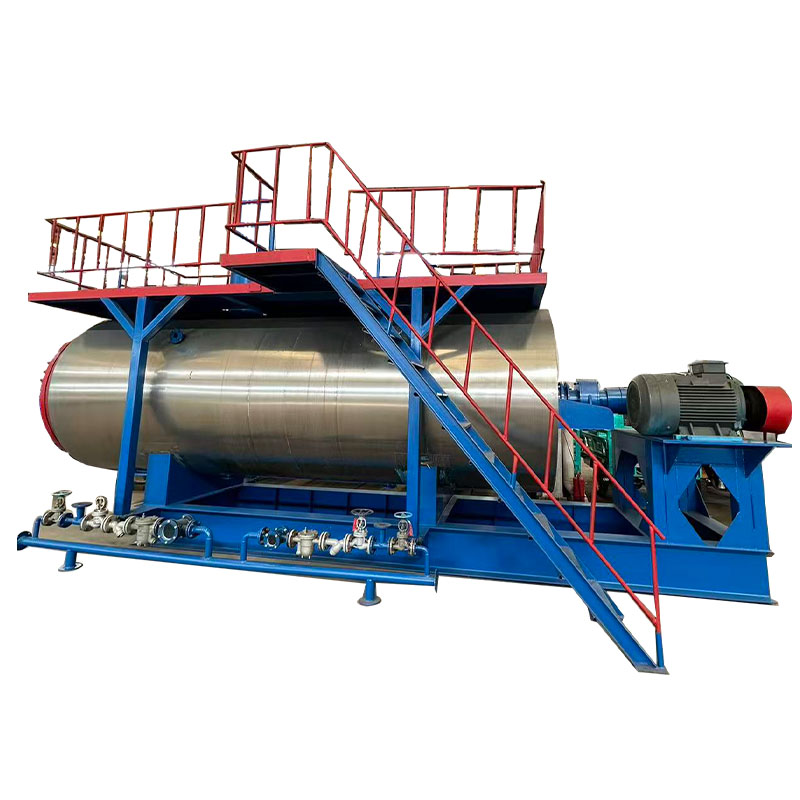
Hydrolysis tank
Product features: High temperature and high pressure design, working pressure is usually 0.3-0.5MPa, working temperature is 120-150 ℃, it can quickly destroy the stable structure of feather keratin and accelerate hydrolysis reaction. Excellent sealing performance, adopting a professional sealing structure to prevent high-temperature and high-pressure steam leakage, ensuring operational safety and reaction efficiency. The tank body is made of pressure vessel specific materials (such as Q345R). Can withstand the acidic/alkaline environment that may occur during the hydrolysis process, extending the service life of the equipment. Stir evenly and efficiently, ensure sufficient contact, and avoid excessive local reaction steps. Automated control, can be paired with temperature and pressure sensors and PLC control systems to achieve heating Insulation Automatic control of pressure relief and other processes, with convenient operation and precise parameters. Complete safety protection: equipped with safety valves Pressure gauge. Emergency relief valves and other devices are installed to prevent danger caused by excessive pressure, and insulation layers are also provided to reduce heat loss.
Function: Keratin hydrolysis: Difficult to dissolve in feathers under high temperature and high pressure environmental conditions Difficult to digest keratin is broken down into easily absorbable small molecule peptides Amino acids (such as leucine and lysine). Simultaneously killing bacteria in feathers during production virus Parasitic eggs and other harmful microorganisms ensure the hygiene and safety of the products. Parameter adjustment and adaptation: Temperature, pressure, reaction time and other parameters can be adjusted according to the requirements of feather types and products.
Usage: In the production of feed raw materials, hydrolyzed feather protein (containing over 80% crude protein) can be used as a high protein feed additive for poultry, livestock, and aquaculture (such as chicken feed and fish feed), replacing some soybean meal and fish meal, and reducing feed costs. Organic fertilizer manufacturing, hydrolysis residue, can be mixed and fermented with other raw materials (straw, feces) to produce organic fertilizer for crop cultivation and improve soil fertility. Waste recycling and disposal: processing feather scraps from poultry slaughterhouses and down processing plants, realizing solid waste, harmless treatment, resource utilization, and reducing environmental pollution.
Advantages: High resource utilization rate: It can convert previously difficult to use feather waste into high-value protein raw materials, with a recovery rate of over 90%, achieving the goal of "turning waste into treasure". The product has high value, hydrolysis products have high nutritional value, are easily digested and absorbed by animals, and the cost is lower than traditional protein raw materials, making it cost-effective for application. Environmentally friendly and pollution-free: Avoiding environmental pollution caused by feather burning and landfilling, in line with environmental policy requirements. High production efficiency, low operating costs, high degree of equipment automation, and reduced labor input; Relatively low energy consumption and controllable long-term operating costs. Strong adaptability: It can handle various types of feather raw materials (chicken, duck, goose feathers, down processing scraps, etc.), and can adjust product indicators according to different application scenarios, with a wide range of applications.